

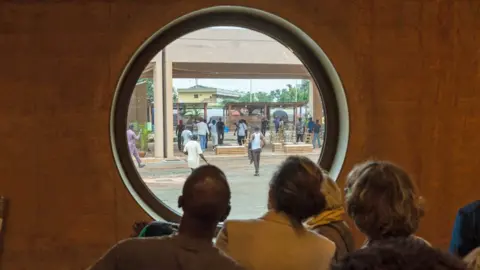
Nigeria's stunning new West African Art Museum (Mowaa) has ended up in the center of area political conflicts during the time it was scheduled to – but failed – to open its doors to the general public for the initial occasion.
The Major Initiative
The 15-acre facility stands in the heart of Benin's urban center, capital of the southern region of Edo – and includes an archaeological dig and buildings designed by celebrated Ghanaian-British architect Sir David Adjaye, best known for the National Museum of African American History and Culture that began operations in Washington DC in 2016.
It has been half a decade in the development – and is envisioned to honor both the heritage and the modern times of cultural innovation in the locale renowned for the Benin Bronzes, cultural objects stolen from the king's palace by British soldiers in the 19th Century.
Preparation and Promise
It is remarkable – and before the anticipated opening, Mowaa was active with workers resolved to show it is a place that can compete with renowned museums and galleries in the Western world.
Inside art restorers meticulously revealed art pieces from secure wrapping, examining each item and taking thorough notes before placing them on walls and stands.
Technicians fine-tuned climate control systems. In the scientific facility, staff members calibrated instruments meant to maintain ancient objects.
Financial Backing and Economic Vision
The venture has been the idea of businessman Phillip Ihenacho – currently Mowaa's managing director.
"I hope us to have a significant economic impact on communities in the vicinity," he explained to journalists, mentioning that he aspired to make the city "an arts hub."
Mowaa, a non-profit local organization, aims at establishing over 30,000 direct and indirect jobs and providing above $80m annually to the area arts sector through collaborations and programming.
Investment and Administrative Problems
It has required $25m to get here – money gathered from different supporters, such as the international partners, the British Museum and the regional authorities.
But at present the local government has revoked permission from beneath it – terminating the occupancy of the site on which the museum was built.
An Edo state spokesperson stated this was because in the initial documents it had referred to itself as the Edo-named institution – and it had later removed "Edo" from its title.
Demonstrations and Government Action
This statement was preceded by protests on recently, when protesters invaded the complex insisting it be designated the Royal Benin Museum.
A boisterous group insulted international visitors at the museum ahead of the opening – forcing them to be hurried away under police escort.
National leader Bola Tinubu has also become involved to try and resolve the tensions, establishing a special task force to do some damage control.
Administrative Challenges
But how has this turned into so controversial – and such a public relations crisis?
Much of it stems from internecine rivalries at a area administrative level, as it was the ex-administrator Godwin Obaseki – whose term in office finished recently – who was a major backer of the initiative.
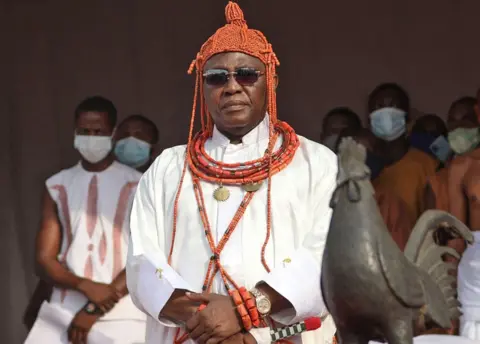
And it seems the leadership of the new governor, a key associate of the area king, referred to as the Oba, may desire greater involvement in the venture. The demonstrators on the weekend, for example, were insisting that the institution be placed under the authority of the current Oba.
The Historical Objects Discussion
This highlights the controversial matter of the cultural artifacts, one of the region's most celebrated historical legacy.
Because even if the museum does ultimately open, these artifacts will be noticeably missing.
They are metal, elephant tusk and wooden artworks that once decorated the king's residence of the ancient kingdom before UK forces looted them in 1897 during a colonial invasion.
Today, thousands continue to be distributed across galleries in the West -- featuring the London museum, Berlin's Humboldt Forum and the Metropolitan Museum of Art.
Restitution Efforts
Their repatriation has become one of the most contested conversations in the worldwide cultural sector. Roughly 150 have presently been returned – and more are due to follow.
When plans for the institution in the city were initially revealed in recent years, the influential figures on the national arts community expected it would become their ideal location – a modern campus to show them off to the global audience.
But the situation became complicated some time back after the federal government declared that the traditional ruler would be the legal custodian of returned objects – and the monarch's court campaigned for a museum under the royal family's direct control, opposing the wishes of the ex-leader.
Political Navigation
This left Mowaa in a difficult situation: maintaining a definite position on repatriation while remaining diplomatic on guardianship – and highlighting its broader vision, which led to|c


